Sponsored article
Gothic Chasuble Style: Cut, Fabric, and Symbolism
- Historical Origins and the Evolution of Liturgical Vestments
- The Gothic Form Compared with Other Chasuble Styles
- The Importance of Fabric and Symbolism
- Tradition, Function and Liturgical Expression
- FAQ: Frequently Asked Questions About Gothic Chasubles
- What distinguishes a Gothic chasuble?
- What is the difference between a Gothic and a Roman chasuble?
- Which fabrics are most commonly used for Gothic chasubles?
- Is the Gothic chasuble permitted under current liturgical regulations?
- Which symbols most commonly appear on Gothic chasubles?
- Why are Gothic chasubles popular for solemn celebrations?
- Does a heavier fabric always indicate a higher-quality chasuble?
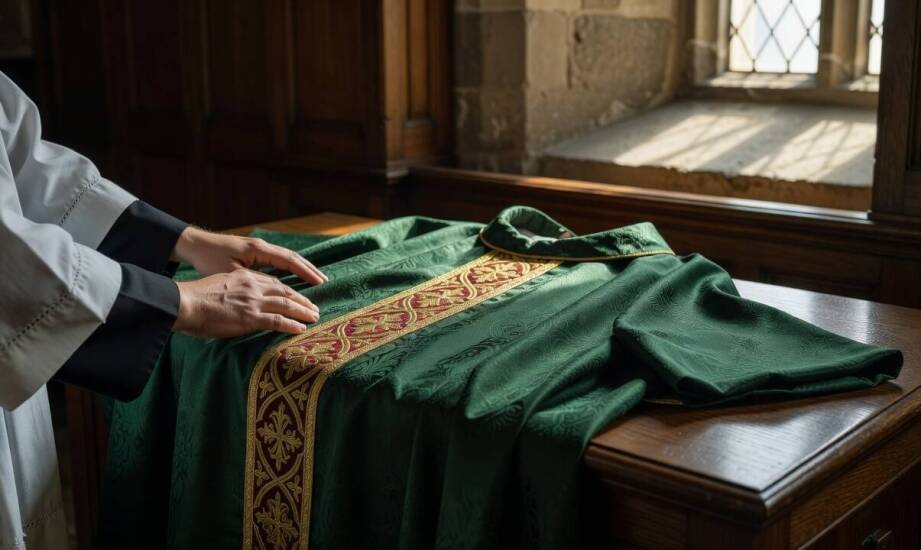
The Gothic style of chasuble is distinguished above all by its wide, freely flowing cut, which emphasises the historic character of the Eucharistic celebration. This form stands in clear contrast to more compact vestment designs. Choosing an appropriate vestment requires an understanding not only of its visual appearance but also of its proportions, fabric structure, and deeply rooted symbolic ornamentation. The correct selection of fabric and tailoring directly affects the priest’s freedom of movement at the altar.
Historical Origins and the Evolution of Liturgical Vestments
The chasuble originates from the Roman paenula, a loose outer cloak commonly worn in antiquity as protection against adverse weather conditions. Early forms of this garment covered the entire body.
From the Middle Ages onwards, the cut of the chasuble was gradually modified to improve the celebrant’s mobility. The purpose was to reduce the weight on the arms and provide greater freedom when raising them during the liturgy. Between the 13th and 15th centuries, the classic Gothic form emerged and remains an important aesthetic reference today. It took the shape of a broad bell or truncated cone, falling evenly on all sides. This design fully covered the shoulders, while the substantial fabric created deep, natural folds.
The Gothic Form Compared with Other Chasuble Styles
A Gothic chasuble is characterised by an oval side profile that eliminates sharp corners and creates a soft, flowing silhouette. In many contemporary examples, the sides extend to the elbows or forearms. Decorative elements are usually arranged vertically, forming a broad ornamental band on the front and a cross motif on the back.
For a fuller understanding, it is worth comparing this cut with the later Roman style. The Roman form features a much narrower structure with deeply cut sides, creating the outline commonly associated with the fiddleback shape. Popular from the 16th to the 19th century, this design exposes the shoulders to a greater extent and allows less natural draping of fabric than the Gothic cut. Its more compact shape facilitated the use of heavy gold and silver embroidery that could have placed excessive strain on larger vestments.
Contemporary manufacturers of liturgical garments, including Ars Sacra, often draw inspiration from historical patterns when creating modern collections. Understanding centuries-old tailoring traditions helps preserve the distinctive proportions associated with both forms.
The Importance of Fabric and Symbolism
The overall shape of a chasuble provides only the foundation. The final appearance of the garment depends largely on the weight, structure and characteristics of the fabric used. Material choice influences not only visual presentation but also comfort during liturgical celebrations.
The Relationship Between Fabric and Liturgical Comfort
Selecting an appropriate fabric is essential for everyday use.
Damask, jacquard, brocade and modern blends of natural and synthetic fibres are frequently used because they help the vestment maintain its shape and achieve an elegant drape. Depending on the material, they may also contribute to comfort and airflow during long services or in warmer conditions.
Smooth synthetic fibres generally offer increased resistance to wrinkling, while richer woven fabrics such as brocade add noticeable weight and visual depth. Heavier or stiffer materials often retain their shape more effectively, although suitability depends on the intended use and the duration of the liturgical celebration.
Colours and Traditional Decorative Motifs
Applied decorations are closely connected to the liturgical calendar and the theological message of a specific celebration. White symbolises purity, light and joy, making it especially appropriate for Christmas and Easter. 'Red' refers to the fire of the Holy Spirit and the witness of the martyrs.
Green represents hope and is commonly used during Ordinary Time, while violet signifies penance, reflection and spiritual preparation during Advent and Lent.
Over centuries, liturgical tradition has developed recognisable visual codes that help the faithful identify the character of a celebration from a distance. A common decorative solution found on chasuble gothique models is the Y-shaped ornament placed on the back of the vestment, often interpreted as a reference to the Cross of Christ.
Designers frequently enrich these broad decorative bands with floral motifs, geometric patterns or Marian monograms. Many contemporary designs move away from elaborate figurative scenes in favour of more universal and timeless symbolic elements.
Tradition, Function and Liturgical Expression
The final selection of a cut and fabric depends on balancing historical heritage, visual clarity and the practical needs of the celebrant. The Gothic form naturally complements solemn liturgical celebrations, where generous folds of fabric enhance the ceremonial character of the rite.
Its wider cut may provide greater freedom of movement than more compact alternatives, while breathable fabrics can improve comfort during longer celebrations. A carefully tailored chasuble therefore becomes a harmonious liturgical vestment that supports both the practical and symbolic dimensions of worship.
FAQ: Frequently Asked Questions About Gothic Chasubles
What distinguishes a Gothic chasuble?
A Gothic chasuble features a wide, flowing cut that covers the shoulders and partially covers the arms of the celebrant. The fabric falls in soft folds, creating a natural and monumental appearance.
What is the difference between a Gothic and a Roman chasuble?
A Gothic chasuble has a broad, spacious cut that allows significant freedom of movement. A Roman chasuble is much narrower, features distinctive cut-away sides and generally has a more structured silhouette.
Which fabrics are most commonly used for Gothic chasubles?
Common choices include damask, jacquard, brocade and modern blends of natural and synthetic fibres. The final selection depends on desired appearance, durability and comfort.
Is the Gothic chasuble permitted under current liturgical regulations?
Yes. The Gothic chasuble remains one of the most widely used forms of liturgical vestment in the Catholic Church and is fully compatible with current liturgical norms.
Which symbols most commonly appear on Gothic chasubles?
The most common motifs include:
Crosses
The IHS Christogram
Eucharistic symbols
Marian monograms
Floral motifs
Geometric ornamentation
The choice of decoration depends on the liturgical season and intended use of the vestment.
Why are Gothic chasubles popular for solemn celebrations?
Their broad cut provides a large decorative surface for embroidery and liturgical symbolism, while the flowing fabric enhances the ceremonial atmosphere of processions and celebrations at the altar.
Does a heavier fabric always indicate a higher-quality chasuble?
No. Quality depends primarily on the fabric itself, workmanship, durability of construction, and the quality of decorative elements. Both lightweight damasks and heavier brocades can be premium materials.
You might be interested

Wholesale mushroom supplier – the key to creativity in professional kitchens

How Does the Shape and Decoration of a Bolesławiec Ceramic Mug Affect Everyday Drinking Comfort?

The role of custom entrance mats in creating a positive brand image
